

An Ipe deck with Chinese Chippendale railings
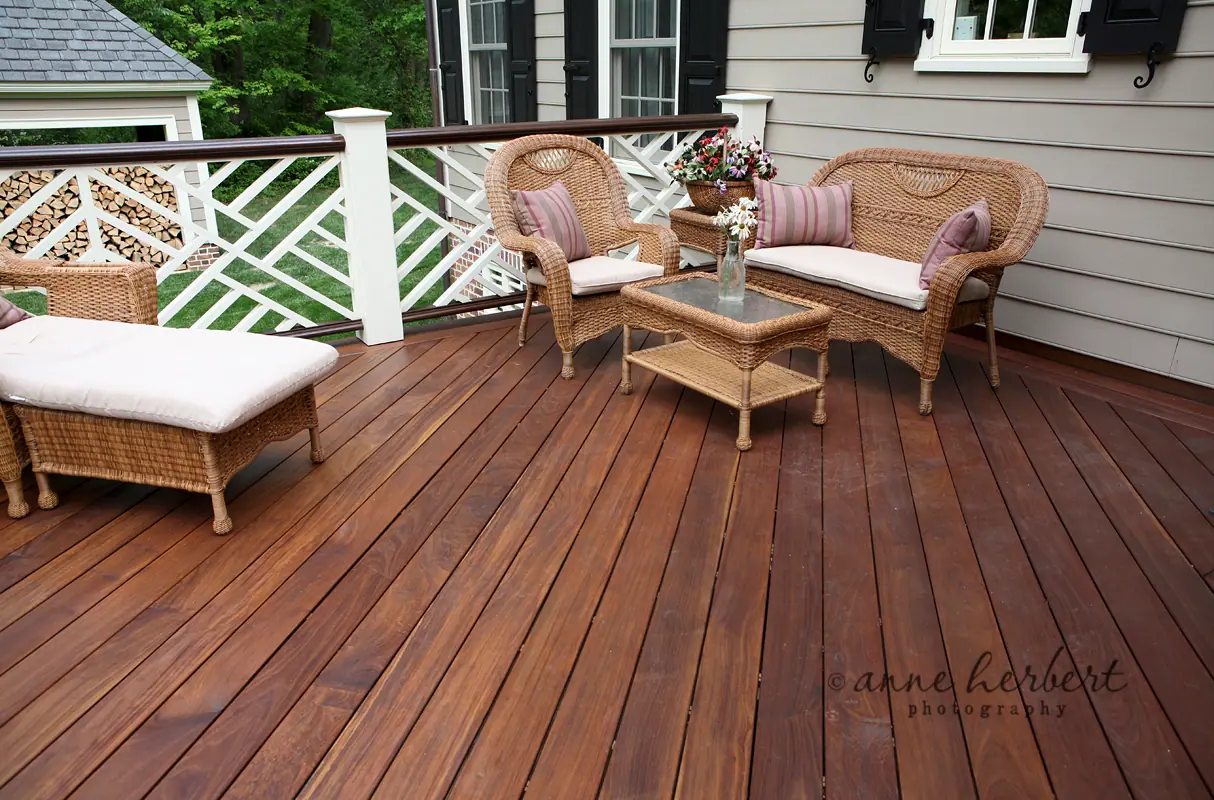
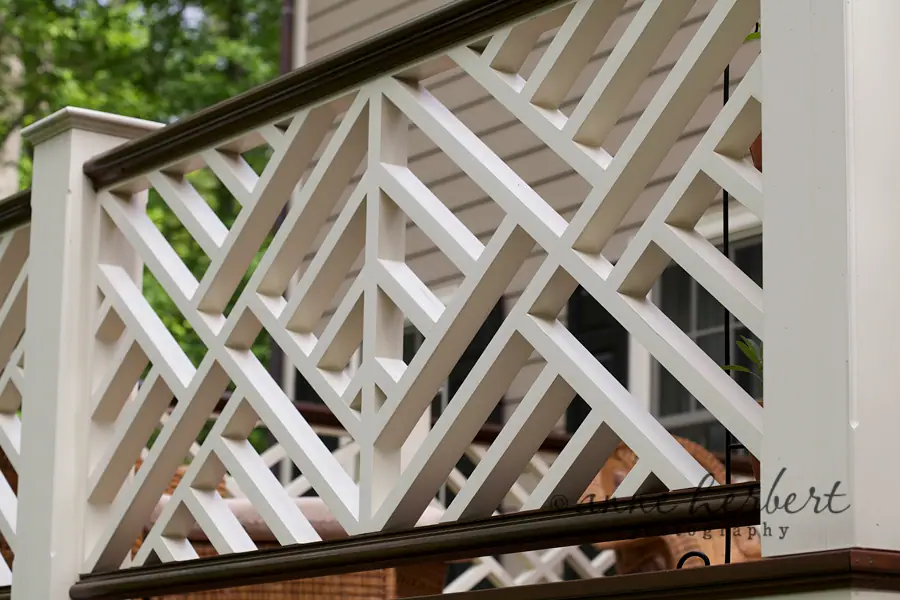
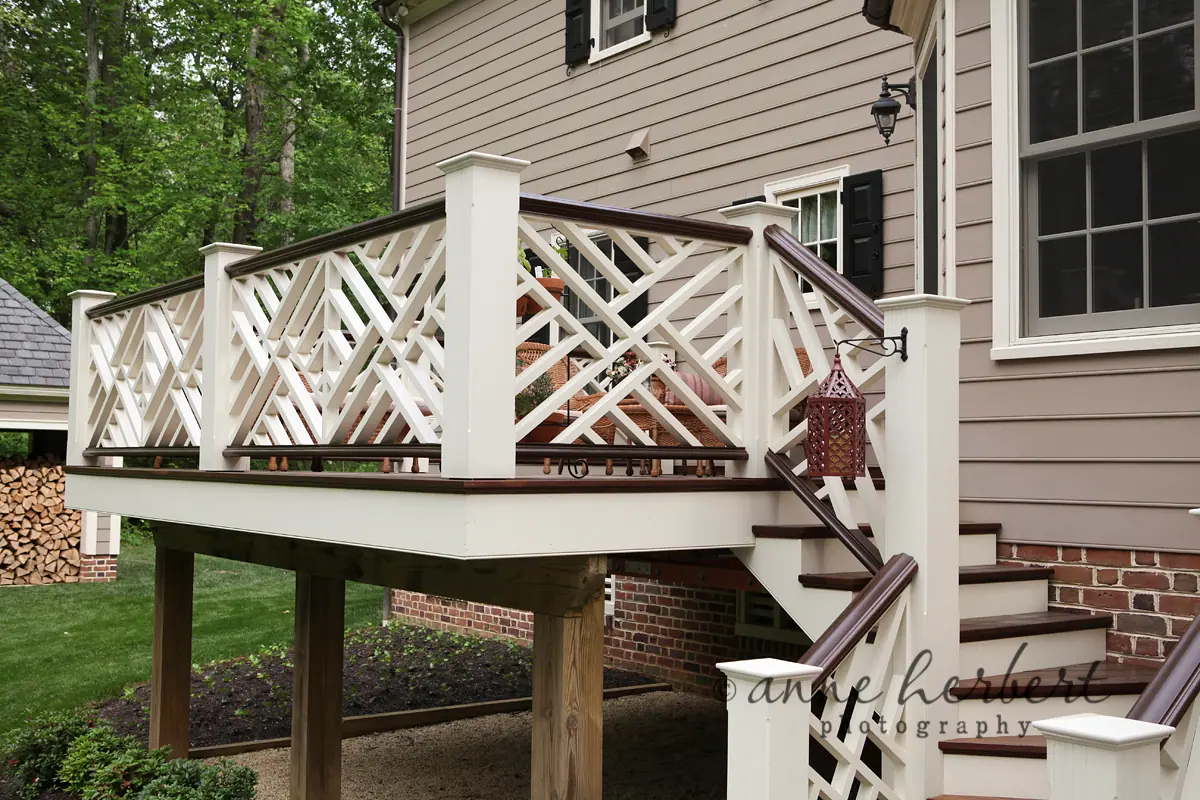
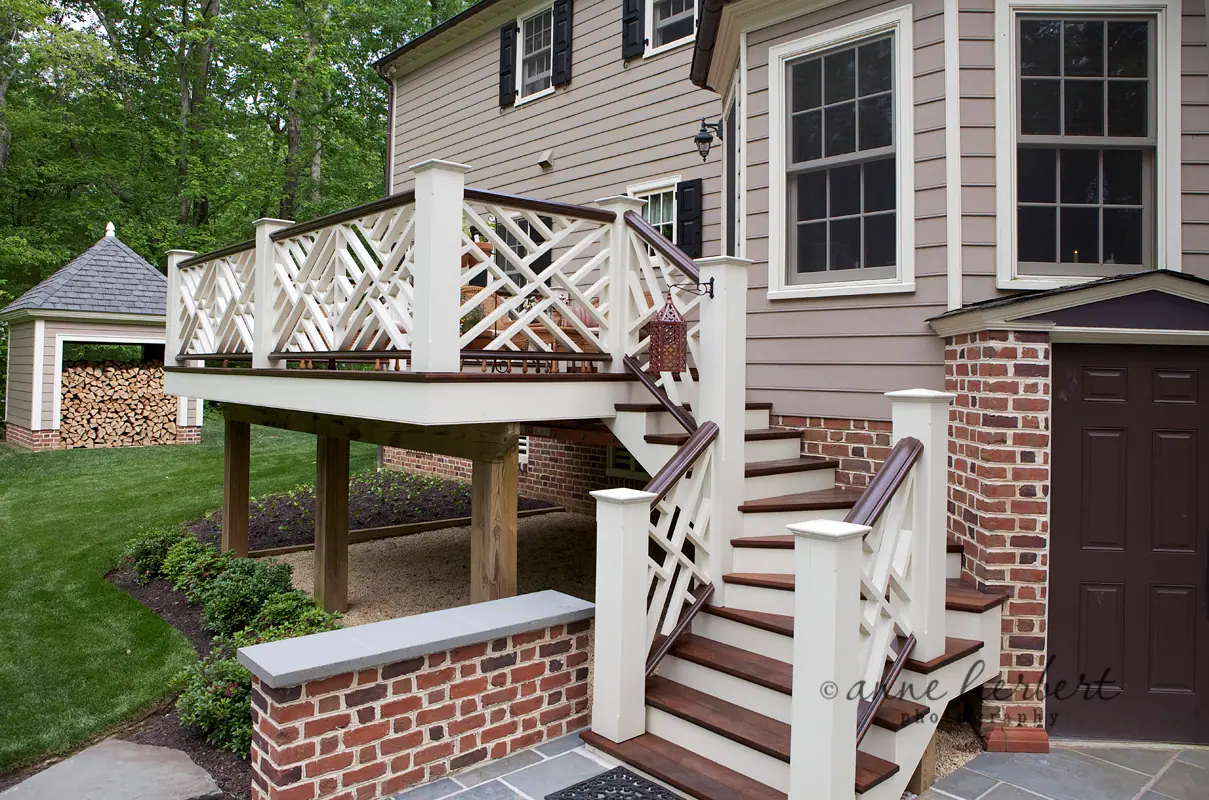
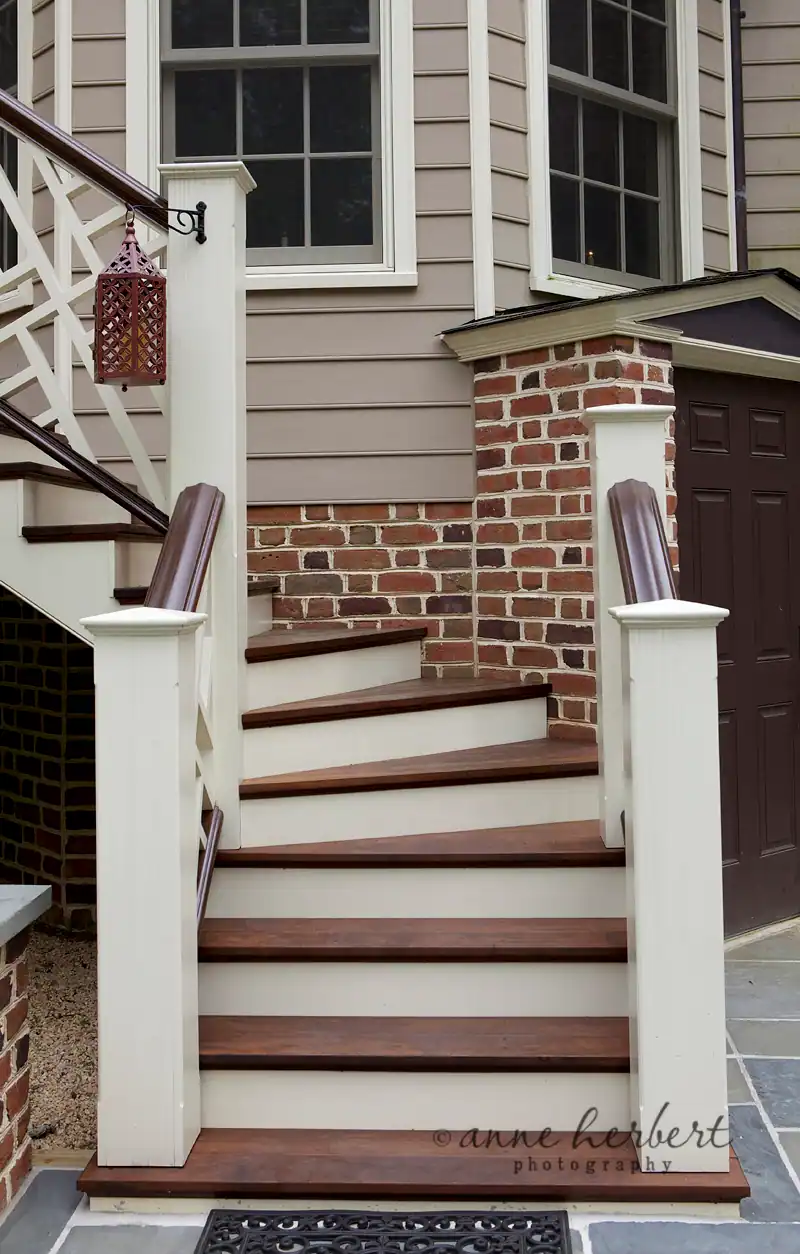
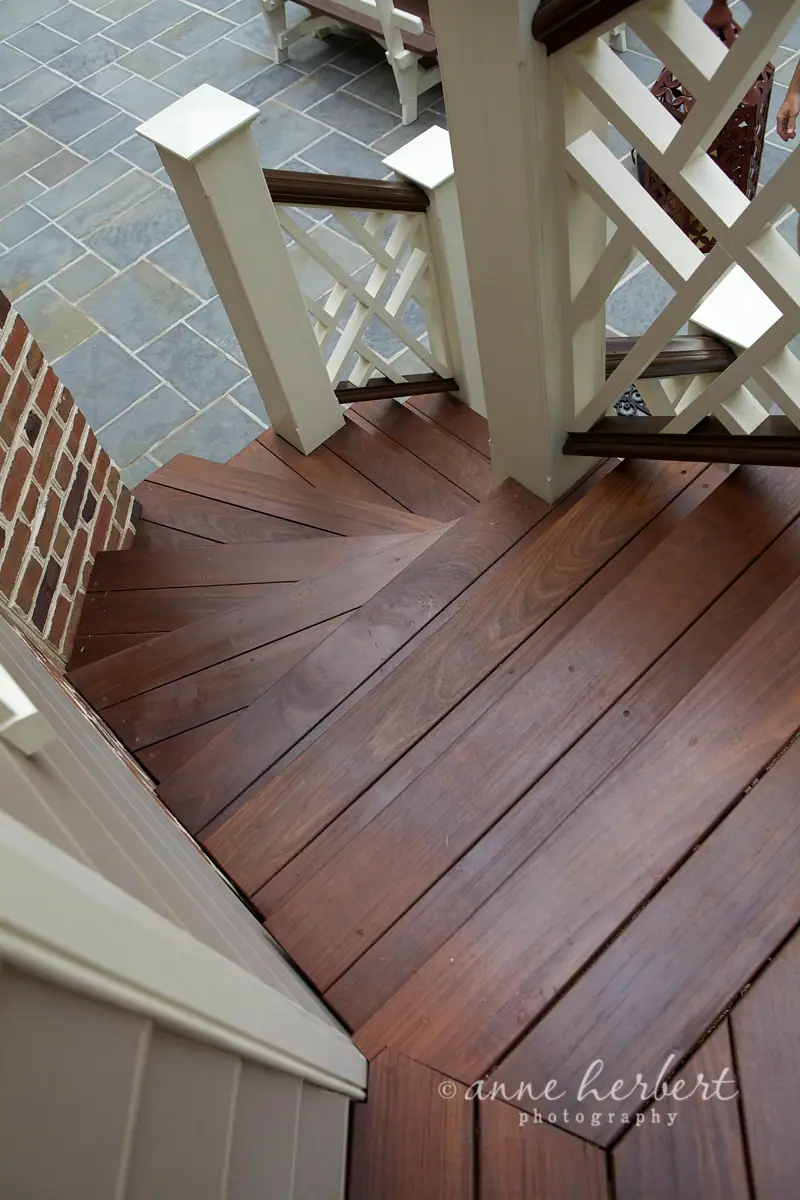
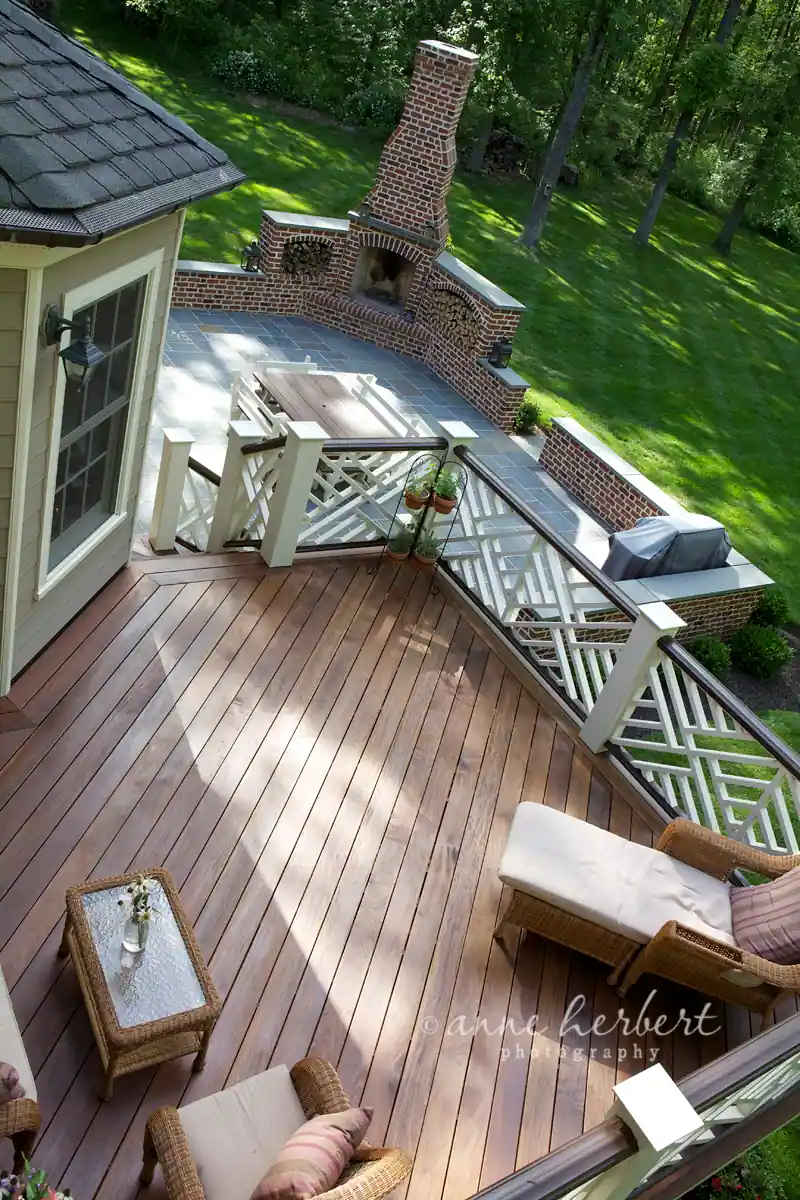
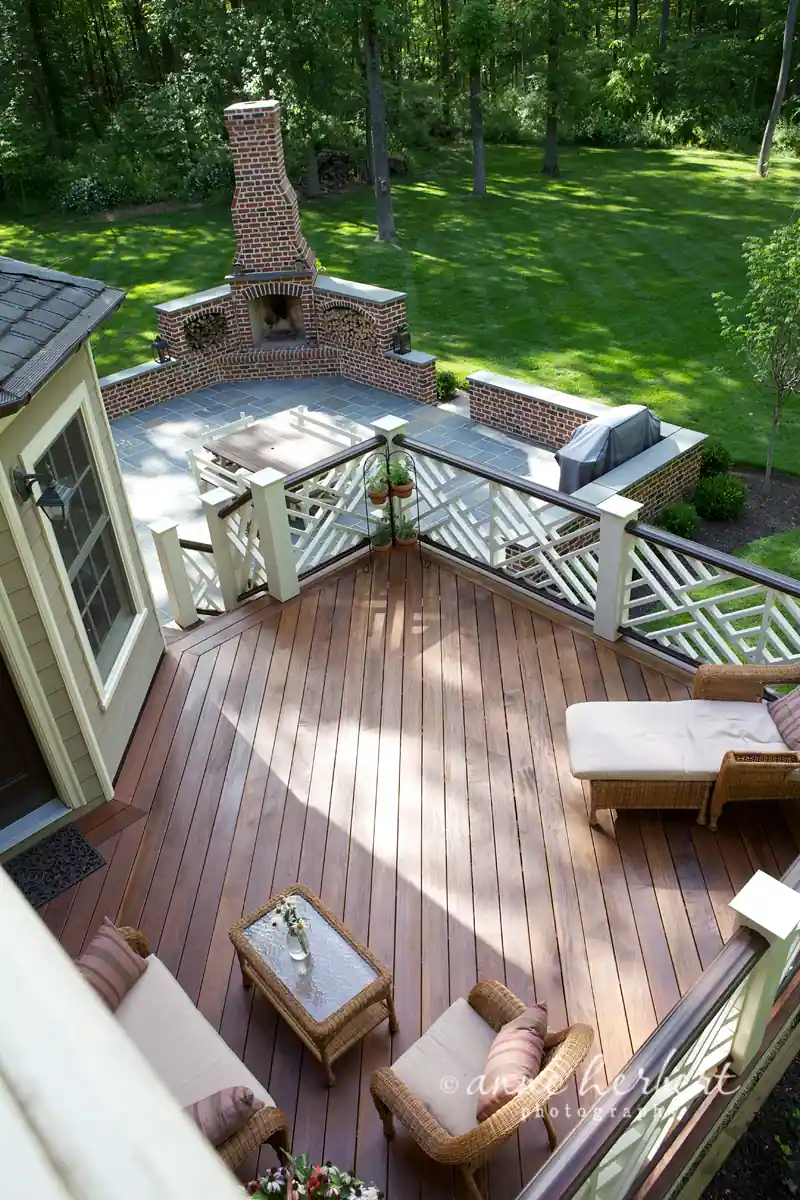
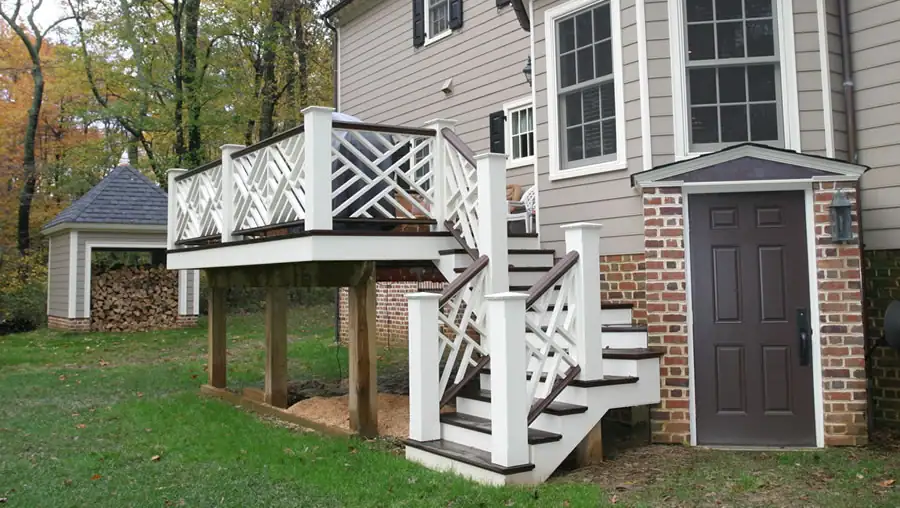
A rear deck in Ipe, the dense South American hardwood, with railings in a Chinese Chippendale pattern handcrafted from Spanish cedar. A stair drops past the brick cellar wall to a flagstone landing.
The project
- Type
- Rear deck and stair
- Decking
- Ipe (Brazilian walnut)
- Railings
- Chinese Chippendale, Spanish cedar
- Gutters
- 20 oz. half-round copper
- Photography
- Anne Herbert Photography
Why Ipe
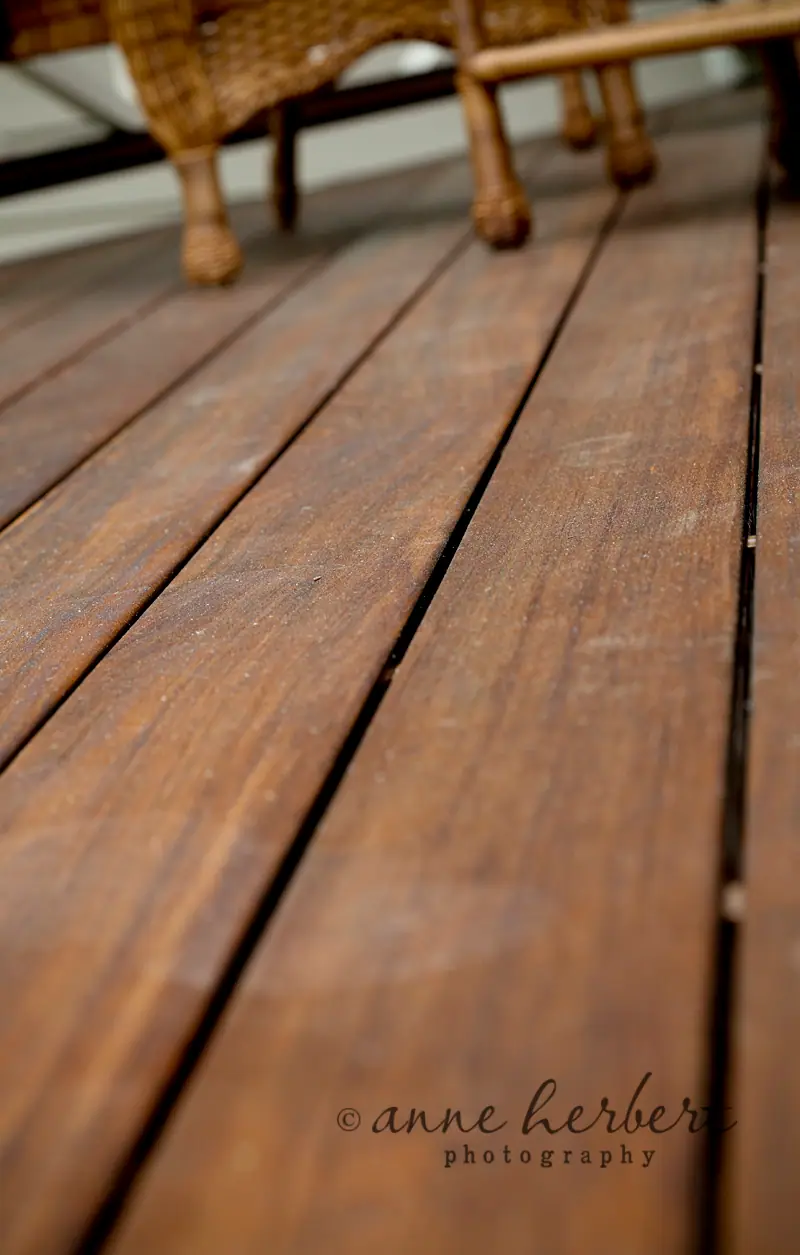
Ipe has a Janka hardness rating of 3,600 lbs., three times that of red oak, and a class 1A fire rating. Its natural oils make it resistant to rot, decay and termites.
The railings
The rails follow the colonial designs of Thomas Chippendale in the mid-1700s, when an oriental spin on furniture and fretwork was the height of fashion. Every panel was handcrafted from Spanish cedar, which stands up to weather on its own.
Photographs
Photography · Anne Herbert Photography
The details, in J.D.'s words
The rear deck
Decking
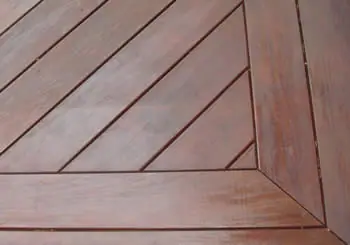
The decking was constructed of Ipe, also known as Brazilian walnut. Ipe is found all over South America and is one of the strongest, densest woods in the world. It has a Janka hardness rating of 3600 lbs. (red oak has a rating of 1200) and a class 1A fire rating which is equivalent to that of concrete! Because of its naturally oily make-up, Ipe is impervious to rot, decay, and termite infestation. It is one of the only species of wood that can be left un-attended to and still get up to 100 year life out of.
J.D. Canatella, on the house
Next project
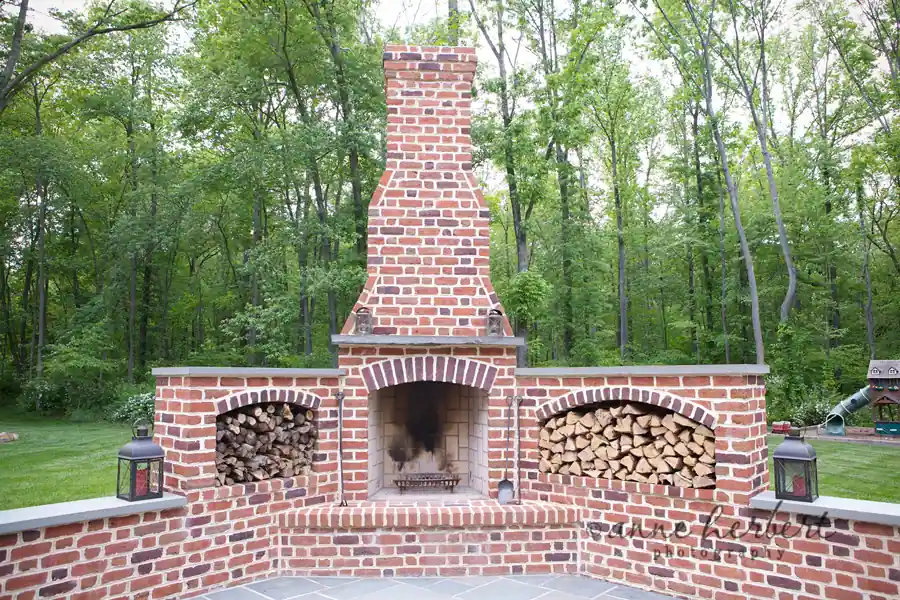
Brick courtyard and fireplace
Planning something like this?
Every project starts with a complimentary consultation. Send a few lines about the job and where it is, or call J.D. directly.