
Slate or standing-seam metal: choosing a roof for a Maryland home
· 7 min read · Canatella Custom Builders
For a colonial or Georgian house in Maryland, natural slate usually looks more correct, lasts longest and costs the most. Standing-seam metal is lighter, sheds snow, suits farmhouses and outbuildings, and still lasts far longer than shingle. Both are roofs you buy once. The right one depends on the style of the house and whether the framing can carry slate.
This is a decision people put real thought into, because a good roof outlives the mortgage, the house's second owner and possibly the oak tree. Here is how we think it through.
Slate and standing seam side by side
| Natural slate | Standing-seam metal | |
|---|---|---|
| Typical lifespan | Hard slate is commonly quoted at 75 years and up; many old slate roofs are past a century | Commonly quoted at 40 to 70 years, depending on the metal and finish |
| Weight | Heavy: roughly 800 to 1,500 lbs. per 100 sq. ft. | Light: roughly 100 to 150 lbs. per 100 sq. ft. |
| Framing | Often needs heavier rafters or sheathing | Works on standard framing |
| Looks | Textured, varied, traditional; right on colonial and Georgian houses | Clean vertical lines; right on farmhouses, porches and outbuildings |
| Snow | Holds snow; snow guards common | Sheds snow fast; snow guards needed over doors and walks |
| Repairs | Individual slates can be replaced by a slater | Panels can be replaced; dents are hard to hide |
| Upfront cost | Highest of the common roofing materials | Below slate, above architectural shingle |
When slate is the right roof
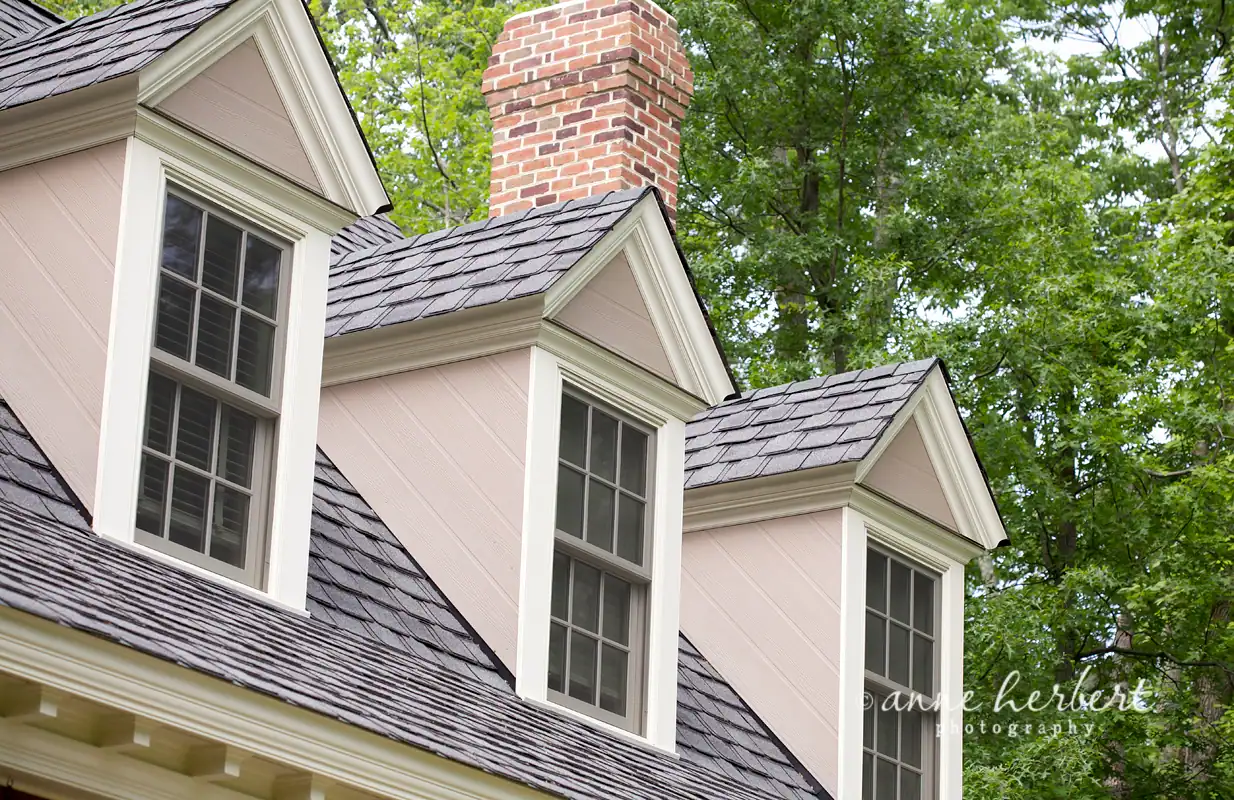
Slate is the roof for a house meant to look as if it has stood for two hundred years. Its small, varied units suit steep roofs with dormers, and it pairs naturally with copper: copper valleys, copper flashing, half-round copper gutters.
Harford County has a claim on it, too. The Peach Bottom slate district runs along the Maryland and Pennsylvania line around Cardiff and Delta, at the top of the county, and old roofs of that dark slate are still sitting on buildings across the region.
The catch is weight. A slate roof can weigh several times what a shingle roof weighs, so the rafters, sheathing and sometimes the walls under them have to be designed for it. On a new custom home that is simply part of the plan. On an existing house, it means an engineer's look before anyone orders a pallet of stone.
When standing seam is the right roof
Standing seam suits low-slope porch roofs, farmhouses, barns and outbuildings, and houses where a crisp, simple roof is the look. It is light enough to go on almost any existing frame, and it sheds snow and leaves without help.
On a colonial, a common and very handsome compromise is slate (or a good slate-look shingle) on the main roof and standing seam on the porch and bay roofs. Historic houses did exactly this with terne-coated and copper roofs on their porches.
The details that decide how either roof lasts
- Flashing. A hundred-year roof with ten-year flashing is a ten-year roof. Copper flashing at chimneys, valleys and dormers is worth it on either material.
- Gutters. On the colonial in our portfolio, the rear gutters are 20 oz., 5" half-round copper with 20 oz., 3" round copper downspouts, soldered seams and copper leaf guards.
- Dormers. Each dormer is a small roof with its own flashing. A copper return along the dormer trim sheds water off its face.
- Snow guards. On metal, plan them over every door and walkway before the first snow, not after.
How we help you decide
We look at the style of the house, the pitch of the roof, the framing and what you want it to look like from the road. Then we price both, so you are choosing between two real numbers, not a brochure and a guess. The consultation is free.
Related service
Roofing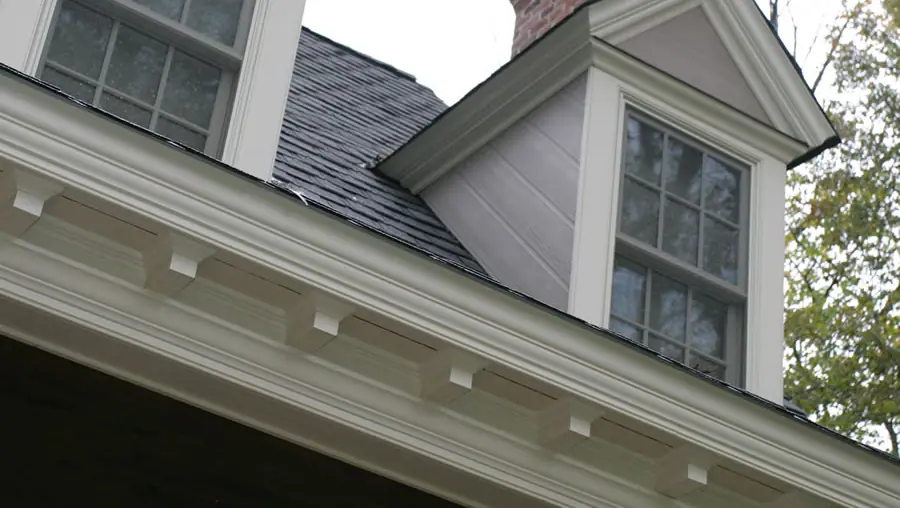

Tell J.D. about your house
Every project starts with a complimentary consultation. Send a few lines about the job and where it is, or call J.D. directly.